Home / Product
Opuntia brasiliensis cactus shipped in 6.5 cm pot brazilian prickly pear
€11.95
Opuntia brasiliensis�also called Brazilian Prickly Pear
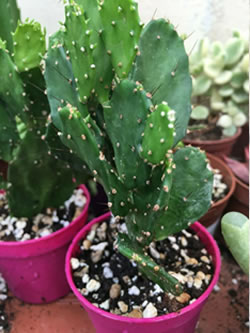
One plant similar in size and shape to the ones in the photo
They are shipped in a 6.5 cm pot
Very easy to care for and grow steadily
Brasiliopuntia brasiliensis (Opuntia brasiliensis) is a tree-like, perennial cactus with a peculiar habit and mode of growth at once distinguish this species.
It rises with a perfectly straight erect slender but firm and stiff round trunk to a height to 9 or more metres tall, very gradually tapering to a point furnished all the way up with short mostly horizontal or declining branches bearing bright green branches of flattened, oval, spiny segments.
The whole plant resembles a straight taper pole artificially dressed up with branches.
The main stem is perfectly round and sheds 2-3-year-old side branches.
The pale yellow flowers open in long succession in spring-summer, only on adult plants over 60-100 cm tall, and are followed by small, yellow fruits.
A number of species have been described in the past, but are now considered only to be variants of B. brasiliensis
One plant similar in size and shape to the ones in the photo
They are shipped in a 6.5 cm pot
Very easy to care for and grow steadily
Brasiliopuntia brasiliensis (Opuntia brasiliensis) is a tree-like, perennial cactus with a peculiar habit and mode of growth at once distinguish this species.
It rises with a perfectly straight erect slender but firm and stiff round trunk to a height to 9 or more metres tall, very gradually tapering to a point furnished all the way up with short mostly horizontal or declining branches bearing bright green branches of flattened, oval, spiny segments.
The whole plant resembles a straight taper pole artificially dressed up with branches.
The main stem is perfectly round and sheds 2-3-year-old side branches.
The pale yellow flowers open in long succession in spring-summer, only on adult plants over 60-100 cm tall, and are followed by small, yellow fruits.
A number of species have been described in the past, but are now considered only to be variants of B. brasiliensis
Product code: 588